


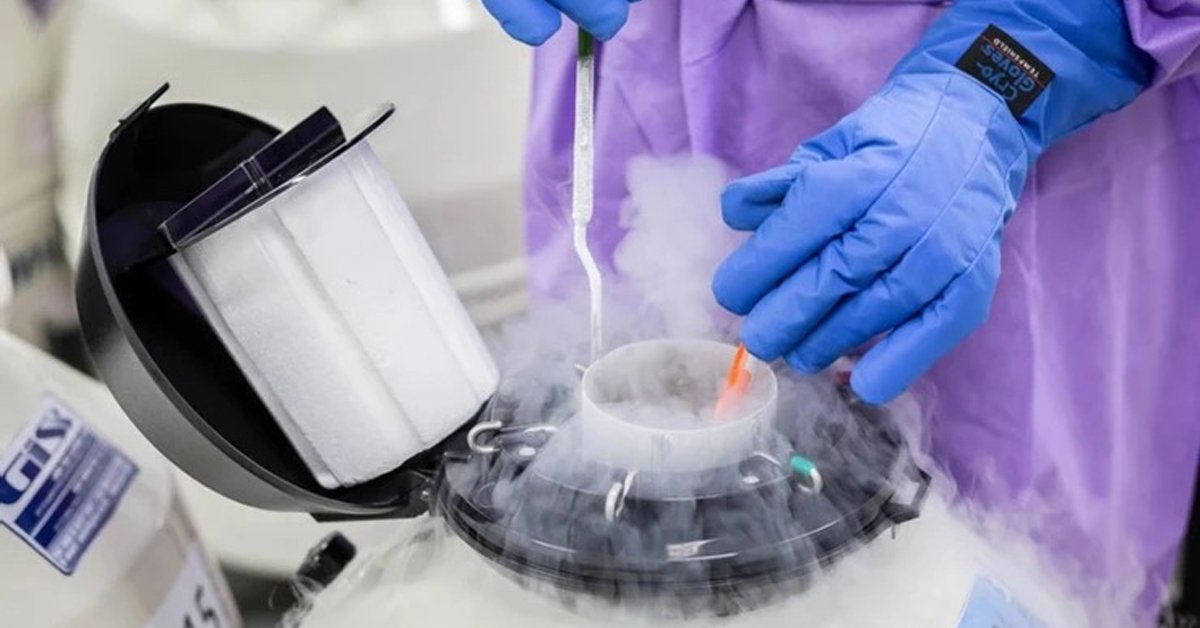
How safe is IVF with frozen eggs, and does it reduce the chances of pregnancy compared with fresh eggs?
In recent years, the vitrification (rapid freezing) technology of oocytes (eggs) has revolutionized assisted reproductive technologies (ART).
Women turn to egg freezing both for oncological or other medical indications and for social reasons, such as postponing childbearing age.
Postponing motherhood due to career, personal plans, or medical indications is a common reality today. Along this path, one of the most frequent and important questions patients have is: “How safe is egg freezing, and does it reduce the chances of pregnancy compared with fresh eggs?”
Researchers from the University of New South Wales (UNSW Sydney), in collaboration with Australian reproductive medicine centers, conducted a large-scale retrospective cohort study in which, based on real clinical data (Real-World Evidence), they compared the outcomes of cryopreserved and subsequently thawed oocytes with the outcomes of using fresh oocytes. Several organizations participated in this study.
The results of a large-scale study were published in the internationally authoritative medical journal Fertility and Sterility, which dispels precisely these doubts and, based on real clinical experience, answers these questions.
Real-World Clinical Practice: What Does the Science Say?
The study showed that with modern technologies, specifically rapid freezing (vitrification):
The result is identical: the live birth rate achieved with frozen-thawed eggs is practically no lower than the results obtained with fresh eggs.
Embryo quality does not change: the process of fertilization (ICSI) and the development of a healthy embryo (blastocyst) occurs with equally high efficiency in frozen and fresh oocytes.
What is the main secret of success?
If you are considering freezing your eggs, you should know the most important golden rule, which the study once again confirmed:
The main determining factor for success is the woman’s age at the time the eggs are frozen, and not the age when she decides to use them.
This means that an egg frozen at the age of 30–35 retains the “biological quality” of that age. Accordingly, when a woman later (for example, at the age of 38 or 40) decides to thaw these eggs and transfer the embryo, her chances of becoming pregnant will still be as high as they were when she was 30–35.
Recommendation to Women
If you are not yet planning to have a child and want to devote time to your career, studies, establishing personal relationships, or simply are not yet ready for motherhood, but notice that the years are passing, do not postpone a consultation with a reproductive specialist.
Time will work in your favor if you take the step early: a woman’s ovarian reserve and the genetic quality of her eggs naturally decline after the age of 35. Freezing eggs at the age of 30–35 is the most reasonable “insurance policy” for your future.
Relieve age-related stress: egg cryopreservation also gives you a certain degree of psychological peace of mind – you no longer have to make decisions about your personal life and motherhood in haste simply because you feel that “the biological clock is ticking.”
Check your ovarian reserve today: with a simple blood test (AMH, anti-Müllerian hormone) and an ultrasound examination, you can find out the current state of your ovaries and accurately plan your next steps.
Which to Choose – Fresh or Frozen?
If you are faced with the choice of starting a new IVF cycle or using already cryopreserved eggs, modern reproductive medicine data show that both approaches can be effective. The decision should be made individually, taking into account the woman’s age, the age at which the eggs were frozen and their number, as well as the specific clinical condition.
Peace of mind: egg freezing gives you the freedom to manage your time and biological clock.
Treatment flexibility: frozen oocytes allow the doctor to prepare the body ideally for embryo transfer (endometrial preparation), without hormonal pressure, which often increases the chances of implantation.
Equal chances: it has been scientifically proven that the freezing process does not damage the genetic structure of the cell and that the health indicators of children born are completely identical.
And finally,
Egg freezing is no longer a “risky experiment”; it is a tried, safe, and highly effective method that gives women complete freedom to plan their future and their family.
Source: Fertility and Sterility (2026) “The efficacy of frozen-thawed oocytes compared with fresh oocytes: real-world evidence” (O. Fitzgerald et al., UNSW Sydney / Virtus Health).