

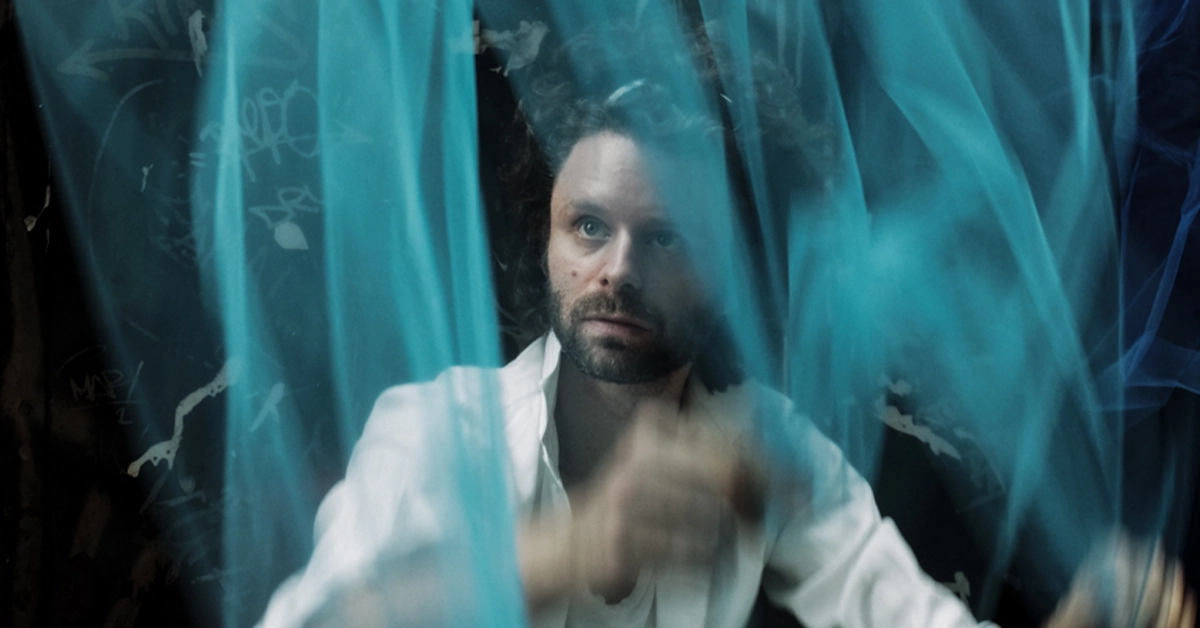
BENJAMIN SHINE
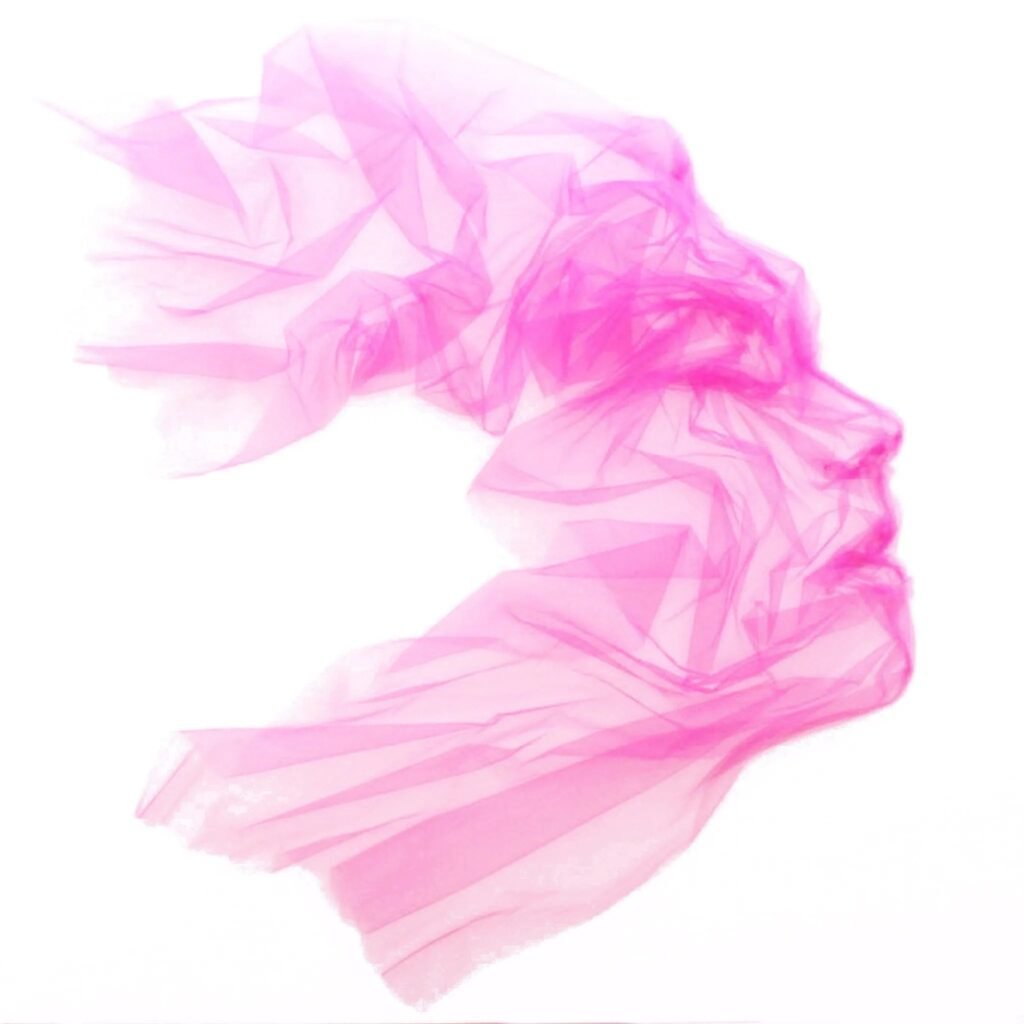
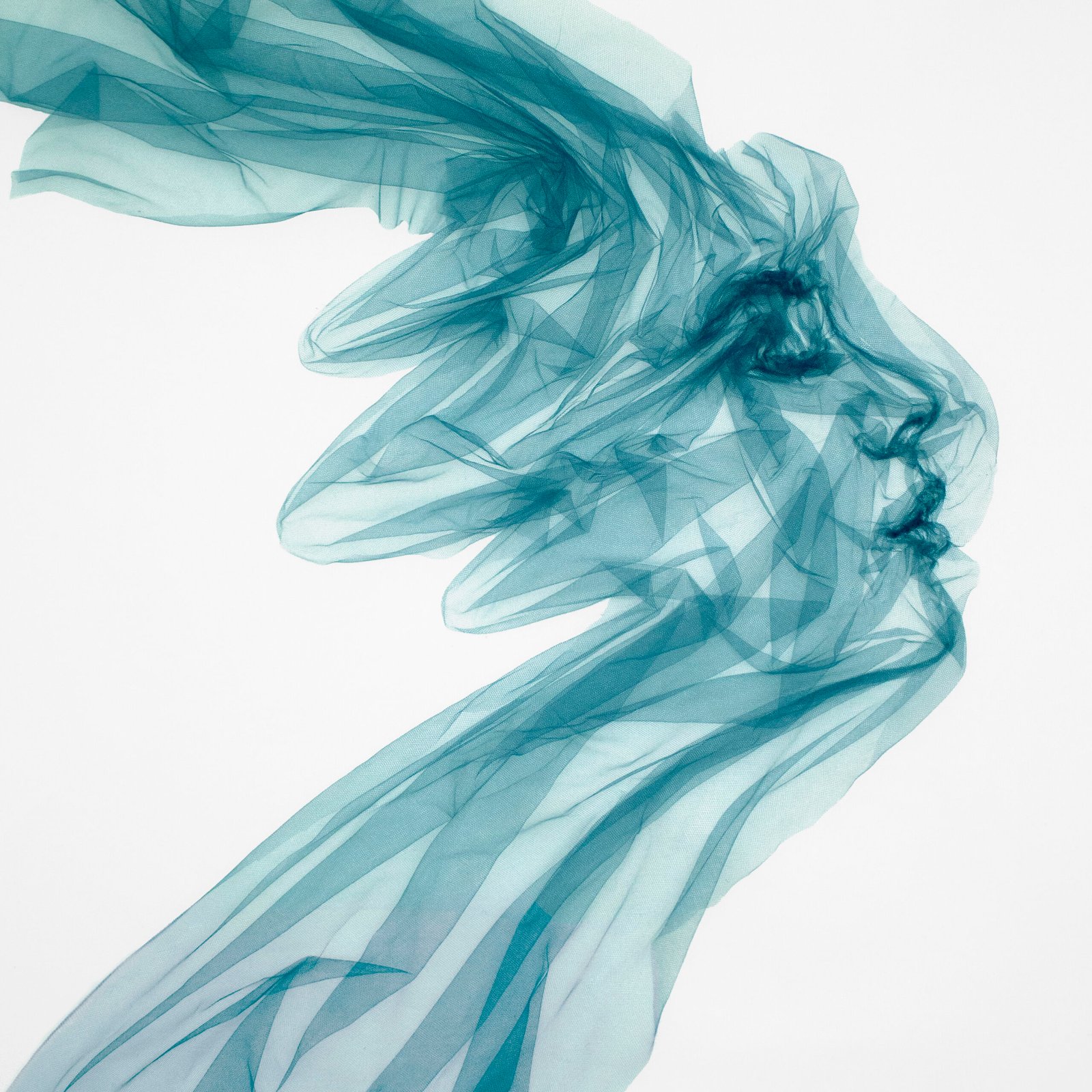
Imagine an art form where clarity is born from chaos, and flowing fabric transforms into ethereal, meditative portraits. Benjamin Shine is a multidisciplinary artist who introduced an entirely new visual language to contemporary art through his unique technique of “painting” with tulle. His work is a physical manifestation of constant transformation, the fragility of life, and invisible energies — moments that are still in the process of becoming, existing on the threshold of creation.
That is precisely why it is so symbolic that a work by Benjamin Shine graces the cover of the very first issue of N FACTOR, a magazine focused on reproductive health and lifestyle. Conception, pregnancy, and embryonic development are, after all, processes just as mysterious and delicate as the birth of a new form in the hands of an artist.
Was the first female face you created based on a real woman?
Yes, in fact the first works I created using tulle were portraits – where capturing realism was the challenge. My first few years working with the material were focused on that, as it gave me a foundational understanding of the material and its potential, before taking steps to develop ideas in different areas.
Your abstract faces series captures so much emotion with minimal forms. Can you tell us how you approach representing different identities, and in particular, women, in your work?
Having proven to myself that the level of detail necessary to create a realistic likeness of a person was possible, I wanted, in a sense, to pare it back, in an effort to allow the material itself to take a more central visual role. In the Flow Series, the works are essentially a hybrid of natural flowing fabric and a face that seems to materialise from the folds. The idea was to literally and metaphorically represent the notion of finding clarity out of chaos. The faces depicted in these works serve to represent the human experience of meditation. For me, the female face best represents ‘the human’, as it conveys positive attributes – and the different identities reflect humanities natural diversity.
In your work, tenderness and softness take on an architectural strength, much like how N Factor explores the powerful forces behind pregnancy and motherhood. How do you translate such subtle, ‘gentle’ qualities into forms that feel so strong and transformative?
I don’t have any conscious approach in this regard – I just stay focused on the balance between working within the limitations of what the fabric will allow, and attaining a likeness of the individual being depicted. I try to leave it up to the combination of both forces to create the outcome – and I take opportunities as they present themselves!
Being featured on the cover of the first issue of N FACTOR is a milestone. What does it mean to you to have your art representing a magazine focused on reproductive health and lifestyle?
So much of my work is about the human condition, the fragility of life, and the duality of the physical and spiritual experience – so it’s especially meaningful to have my work featured in this context.
Are there particular women, stories, or moments that have influenced the way you depict faces and human expression?
For the most part, the works featuring faces, especially the one-piece Flows, serve to convey a sense of meditation, so the faces are all in a state of calm, with eyes closed.
Your portraits capture moments still in formation, existing on the threshold of becoming. In the same way, N Factor explores processes – pregnancy, embryonic development, the emergence of life itself. How do you see your work reflecting these ideas of creation and transformation, and what does it mean to witness a form as it is still coming into being?
What a great observation regarding this connection! In my work, there are usually two forces at play – one is a physical challenge: how can I use a material to do a certain thing, and the other is a visual aspiration: how can I create something that expresses an idea. The concept of transformation has always been present in my work since I was at school, most probably due to the 80’s toy, Transformers. Whether products, sculptures, or clothing, I love creating something that turns into something else. And of course that’s part of life, of the human condition – change, transformation, and evolving. Yet ultimately, it’s fleeting; it’s impermanent – indeed everything is energy. These are concepts I try to evoke, and I’ve found that tulle lends itself remarkably well to conveying these ideas.
Your textures reveal invisible forces like air, movement, and tension. N FACTOR similarly makes hidden processes visible. How do you approach uncovering what is normally unseen, and what do you hope viewers take away from witnessing these hidden layers?
I have a long-standing fascination and curiosity with the ‘unseen’ aspects that we sometimes sense, and which have provided such mystery for millennia. I personally feel that humanity is somewhat stuck and, for whatever reason, we are not managing to make sense of or understand the parts that may be puzzle pieces needed to progress. In current quantum physics alone, we are being baffled by scenarios that don’t make sense based on our current understandings of physics. But all of this points to an apparent larger reality at play – one we don’t, or can’t, fully understand. Where my work alludes to dematerialisation, manifestation of energy taking physical form, and objects in states of flux, my hope is to contribute to that conversation and questioning of ‘what’s actually going on here?’ Because if we don’t ask the questions, we’re unlikely to get the answers – and without answers, I don’t see how we’re going to progress.
Art can spark conversations that other mediums might not. How do you hope your work encourages dialogue about women’s identity and empowerment?
For me, women are the ambassadors of humanity – that’s why my work features the female face so prevalently. Notions of love, nurture, compassion, empathy, strength, and resilience are seemingly, unconsciously, and universally interpreted through the representation of a woman’s face. A man’s face, on the other hand, does not convey those same attributes, so if I’m wanting to create works that reflect positive, uplifting notions of humanity, my preference is to use a face that conveys those qualities.
Which part of your creative process do you enjoy the most? For the most part, it’s often the idea stage and getting excited about the potential of bringing something new into the world – and then, once completed, it’s the satisfaction of achieving it. Some parts of the making process are enjoyable, but it’s very often a rollercoaster ride and fraught with challenges!
How does your surroundings influence your creative process? Is there a specific environment – like music, silence, or nature, that helps you most when you’re creating?
I’m quite happy working in silence, but sometimes I’ll listen to music and even podcasts. For many years I’ve enjoyed listening to stories of people who have experienced NDEs (near-death experiences). I find the stories really take my mind away from the everyday and into these surreal worlds that inspire a very different perspective.
You’ve worked with many well-known fashion (and not only) brands and people from the entertainment industry. Is medicine part of your future plans as well?
I created a piece for the CEO of a pharmaceutical company out of the reject pill packs from the manufacturing process. These white blister packs formed a very clinical and minimalistic texture, but when the backlight was switched on, certain blisters became illuminated to reveal the portrait image. I don’t have any plans at present to create anything with actual medicine, but I am in discussion for a piece at a newly built hospital.
Looking back, how has your artistic approach changed over time?
It’s funny you ask, as I was recently going through my archive and I have all my sketchbooks dating back to my school days, so that’s about 30 years, and I noticed that fundamentally my approach is the same. I have always enjoyed delving deep and trying to find something new and worthwhile to explore. I’m still the same now – I’m always interested in pushing my own limits and trying something new.
What directions or ideas are you excited to explore in the future? There are quite a few directions I still want to take my tulle work – pursuing some lines I mentioned here, especially my new Incarnation Series and new works in relation to mysterious and unexplainable phenomena. Separately, I have many projects underway that sit in the invention and innovation category, including public sculpture, a collaboration with a 3D-printed shoe brand that will soon be released, a technology product that is currently being built, and the ongoing development of my two new artwork series, Fold and Nexus, which I recently exhibited in Sydney, Australia.
Interviewed by Irina Kalandadze
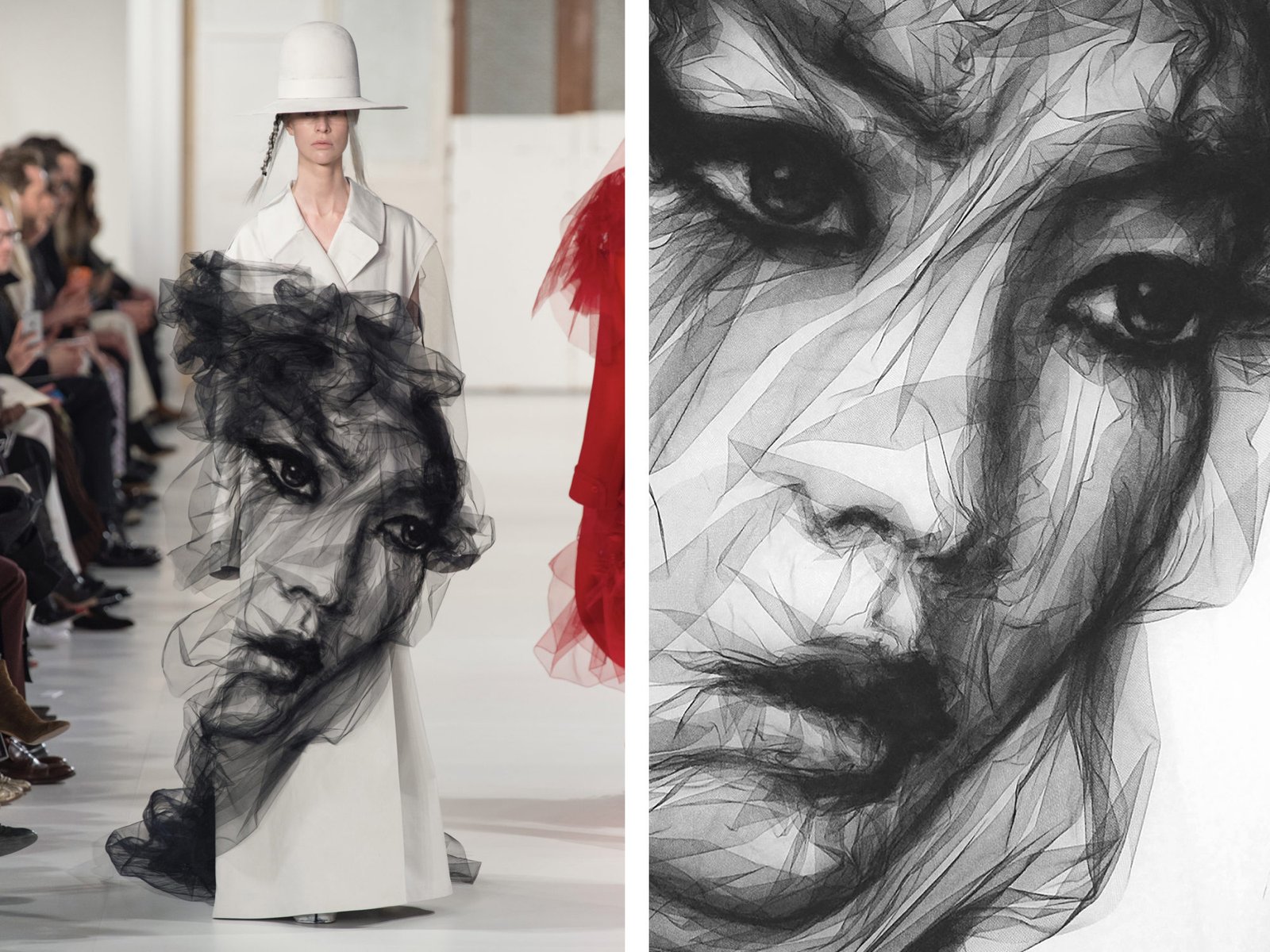
Benjamin Shine’s work on a dress created by John Galliano.
Maison Margiela / Spring-Summer 2017