


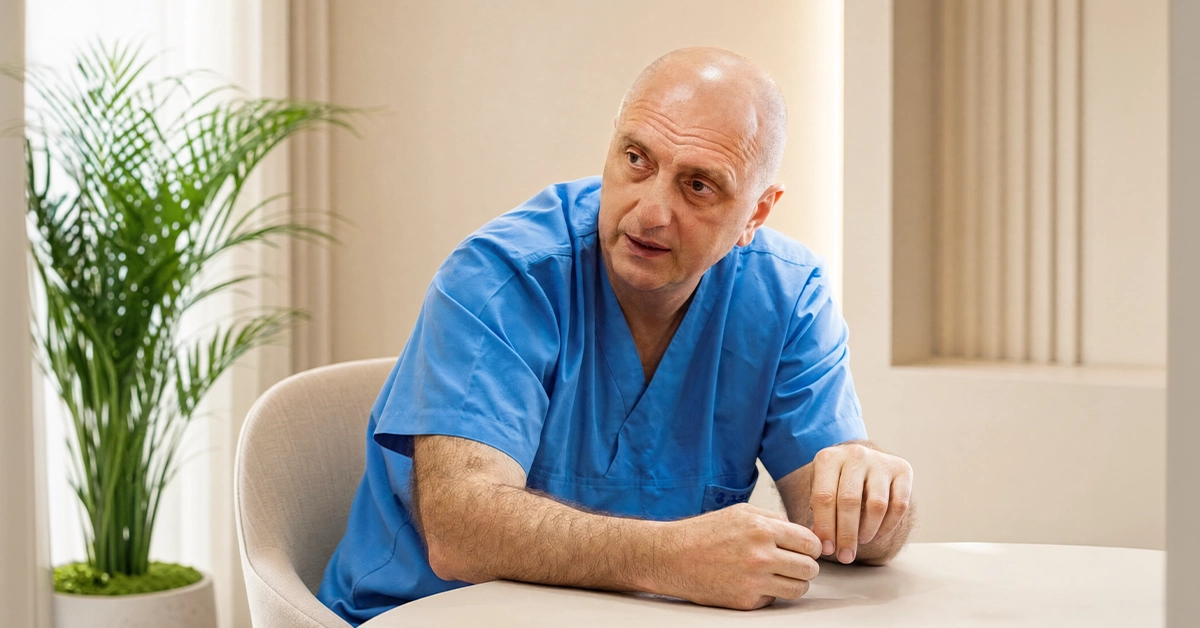
Mamuka Bokuchava
Pregnancy and Venous Health: What Expectant Mothers Need to Know
An Angiologist’s Blog
Pregnancy is not just about the anticipation of a new life; it is a period when a woman’s body undergoes significant changes. These changes can also affect the venous system. Venous diseases are quite common during pregnancy and sometimes develop unnoticed.
Venous problems include venous insufficiency of both the lower extremities and the pelvis, as well as thrombosis and its complications. It is important to know that pregnancy itself is a significant risk factor for the development of venous disease, as the changes occurring in the expectant mother’s body — such as elevated hormone levels, increased circulating blood volume, or pressure from the uterus on blood vessels — trigger venous pathologies. According to studies, venous problems occur in 40–80% of pregnant women. Every subsequent pregnancy exacerbates venous problems, making proper preparation for pregnancy, childbirth, and the postpartum period essential. Preventing venous disease and treating pelvic venous insufficiency prior to a planned pregnancy are two key issues that expectant mothers should be aware of.
Risk Factors and Prevalence
Venous thromboembolism is a serious complication, and its risk in pregnant women is 4–5 times higher than in non-pregnant women.
Particularly noteworthy are conditions such as multiple pregnancies, preeclampsia, and ovarian hyperstimulation syndrome, which significantly increase the likelihood of developing venous complications.
The risk of developing venous disease increases with the presence of various factors. One of the primary ones is genetic predisposition. Age also increases the risk, especially in pregnancies occurring after age 35, as does pre-pregnancy overweight or obesity, and diagnosed but untreated venous insufficiency.
Risk factors also include congenital or acquired thrombophilia (hypercoagulability), immobilization during pregnancy, ovarian hyperstimulation syndrome, and cesarean section, especially in emergency cases.
The probability of venous complications is further increased by comorbidities such as preeclampsia, antiphospholipid syndrome, lupus, inflammatory bowel diseases, and nephrotic syndrome.
Diagnosis
Venous insufficiency often begins with symptoms such as heaviness, pain, or fatigue in the legs, swelling, and varicose veins. In such cases, a visit to the doctor is essential.
A physical examination includes a detailed visual and palpatory assessment of the lower extremities, vulva, and perineal area. Standard practice involves measuring limb circumference at specific levels to appropriately prescribe compression therapy for pregnancy (properly fitted stockings or compression tights for the patient).
When evaluating the venous system during pregnancy (both in terms of assessing venous capacity and detecting thrombotic changes), an ultrasound is the preferred examination. The examination is performed in standing and supine positions; it assesses blood flow in the main venous trunks, the condition of valves within the vessel lumen, the presence of reflux, and the patency of main vascular pathways.
Patients presenting with lower limb venous insufficiency, a history of pelvic venous insufficiency, perineal and vulvar varicose veins, or those suspected of having venous thrombosis should always undergo a transabdominal Doppler ultrasound to evaluate the veins of the abdominal and pelvic cavities.
Along with a venous ultrasound, a D-dimer test is sometimes performed (taking into account its physiological increase during pregnancy). Compression ultrasound remains the gold standard for diagnosis. In doubtful cases or if pulmonary embolism is suspected, taking fetal safety into account, additional imaging studies may be required.
In highly suspicious and life-threatening cases (especially in the third trimester of pregnancy), magnetic resonance imaging (MRI) is sometimes utilized (preferably without the use of contrast agents). Venography in pregnant women is quite challenging due to fetal movements, although it provides high sensitivity and specificity for detecting thrombi in the internal iliac and ovarian veins.
How to Protect Yourself
The management of venous disease during pregnancy is primarily focused on prevention. First and foremost is developing healthy habits: avoid prolonged sitting or standing, walk daily, engage in light exercises (swimming, yoga), and elevate your legs above heart level when resting. Avoid hot baths and saunas, as well as excessive heat (e.g., underfloor heating). Proper nutrition is also crucial; consume more fiber-rich foods, reduce salt intake, and monitor your weight.
Compression Therapy – The Main Weapon
During pregnancy, compression stockings or tights are one of the most effective prevention methods. Stockings improve blood circulation, reduce swelling, prevent varicose veins, and lower the risk of thrombosis. It is important to choose the correct stocking size and wear them regularly throughout the day. A doctor may prescribe phlebotropic drugs or anticoagulants in high-risk situations.
In cases of pelvic venous insufficiency, special support belts are used to help alleviate symptoms.
Venous problems are common during pregnancy, but they are manageable. Evaluating venous health before a planned pregnancy, proper prevention, and timely diagnosis are the three steps that significantly reduce the risk of complications for both the mother and the baby.