


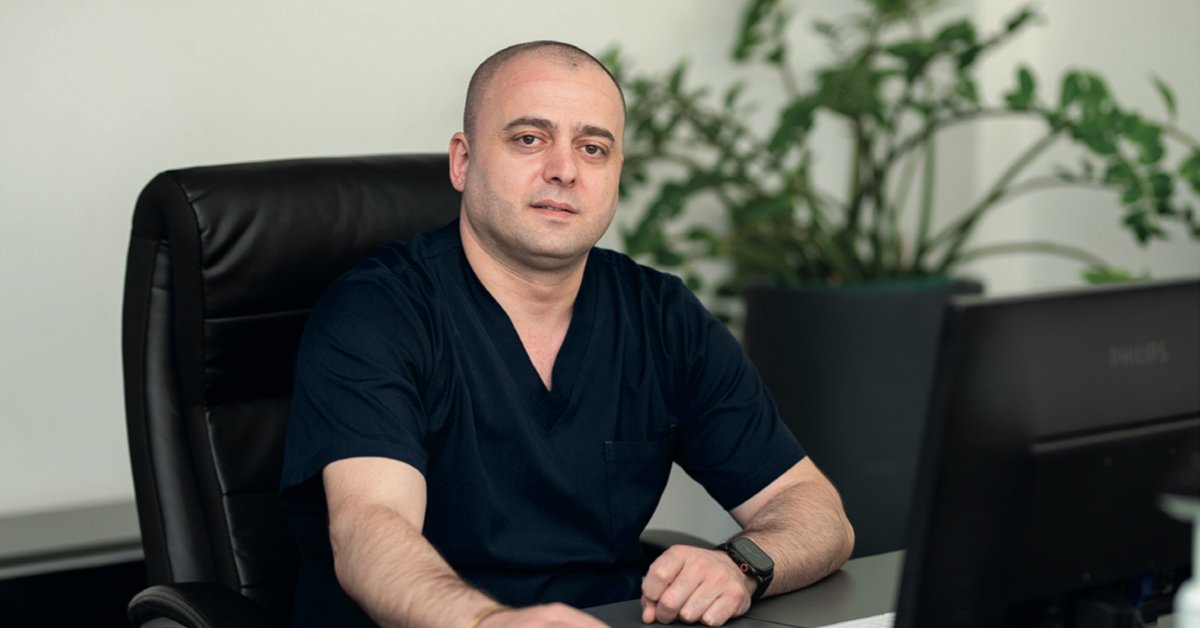
NIKOLOZ SARAULI
Endometriosis: The Hidden Epidemic, Challenges of Modern Surgery, and Preserving the Chance of Motherhood
Millions of women around the world deal with pain every month that is often dismissed as a “normal occurrence” by those around them, and sometimes even by doctors themselves. However, when menstrual pain disrupts the normal rhythm of life, ruins plans, and destroys one’s psycho-emotional state, it goes well beyond the bounds of normal. Behind this invisible suffering, there is very often one specific diagnosis — endometriosis. It is a chronic, complex, and multifaceted disease that silently progresses in a woman’s body, threatening reproductive health and lowering the quality of life.

Regarding this topic, we speak with Nika Sarauli, gynecologist and onco-gynecologist at Mardaleishvili Medical Center.
Let’s start with the main question: What is endometriosis, and why is it such a global and significant medical problem?
Endometriosis is a chronic gynecological disease. To explain it simply, the inner lining of the uterus — the endometrium — which grows every month and sheds as menstruation, begins to grow outside the uterus. This tissue can appear on the ovaries, fallopian tubes, pelvic walls, intestines, or even the bladder.
The problem is that these cells found outside the uterus normally respond to hormonal changes. However, unlike the uterus, this blood has no way to exit the body. This causes local chronic inflammation, scarring, adhesions, severe pain, and often, infertility. The disease not only destroys physical health but also has a massive impact on a woman’s psycho-emotional state and social life.
It is known that diagnosing endometriosis often takes years. Why is there such a delay in diagnosis?
I agree, this is one of the biggest challenges worldwide. Statistically, it takes an average of 7 to 10 years from the onset of symptoms to an accurate diagnosis. Primarily, this is because the symptoms are often nonspecific and resemble other conditions. The second and more serious reason is the existing stigma in society: for generations, women have been taught that menstruation is supposed to be painful. Many patients endure unbearable pain for years, considering it a “normal” occurrence. In my practice, a very large portion of patients come in at an already advanced stage, when the disease has spread widely in the pelvic cavity, neighboring organs are damaged, and treatment becomes much more complicated.
What are the symptoms that should definitely make a woman suspect endometriosis?
There are several main signs to look out for. First of all, this is dysmenorrhea, or severe menstrual pain that isn’t relieved by standard painkillers and interferes with a woman’s daily activities.
The second sign is chronic pelvic pain, which bothers the patient independently of her menstrual cycle. Dyspareunia is also common, which means deep pain during or after sexual intercourse.
Additionally, a crucial symptom is infertility, when pregnancy does not occur despite regular sexual activity for one year. Furthermore, pain during bowel movements or urination may occur, especially during the menstrual cycle.
One important paradox must definitely be noted: the severity of pain in endometriosis does not always correspond to the severity of the disease. A woman may have very small lesions and experience unbearable pain, or she may have large cysts and have almost no symptoms.
How is the disease accurately diagnosed today, in modern conditions?
Diagnosis today relies on a comprehensive approach. It starts with a detailed clinical assessment and continues with expert ultrasonography. This isn’t a standard ultrasound; here, a specially trained doctor looks for specific endometriotic nodules and lesions. The next step is Magnetic Resonance Imaging (MRI), which gives us a detailed picture of the pelvic cavity and is particularly important for deep endometriosis. The “gold standard” of diagnostics is laparoscopy — a minimally invasive surgery that is both diagnostic and therapeutic.
Today, we attach special importance to proper advance planning, the so-called “mapping.” Before surgery, we need to know exactly the localization and size of the lesions so that the intervention is as effective as possible.
What approaches do you use for treatment? What is the gold standard today?
Treatment is always individualized and depends on the patient’s age, the severity of symptoms, and whether she plans to become pregnant. We have two main directions. The first is medical treatment, where we primarily use hormonal medications and anti-inflammatory drugs to manage the pain syndrome. However, we must understand that this approach does not cure the disease; it only controls the symptoms.
The second direction is surgical treatment, which in my practice is the decisive method in complex cases. Surgery is necessary when we have large cysts, severe pain that does not respond to medication, or an infertility problem. Our main goal is the most complete excision of the diseased lesions possible and the restoration of normal pelvic anatomy.
You mentioned surgery. Let’s talk about robot-assisted technologies. What are its advantages in managing endometriosis?
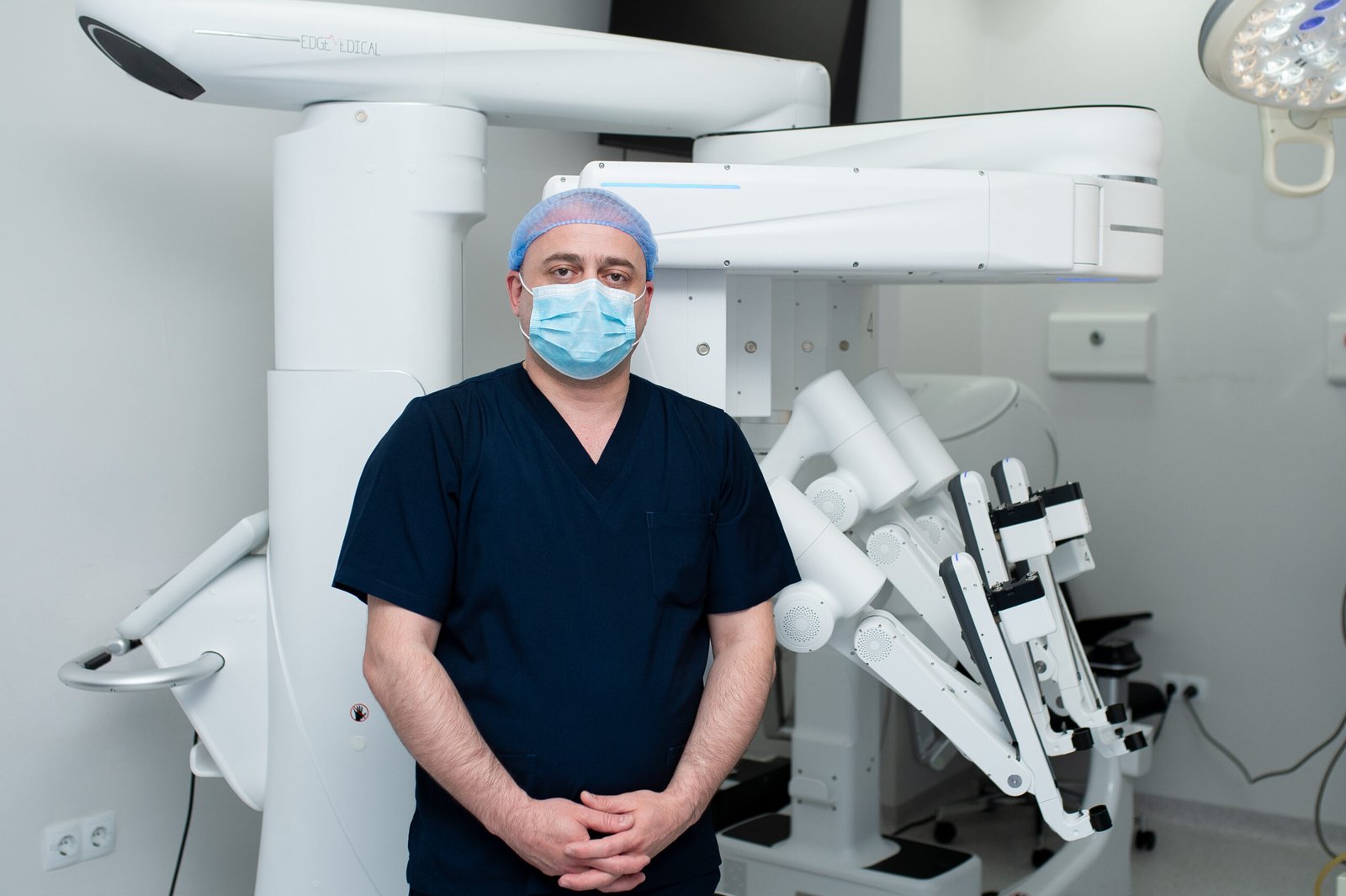
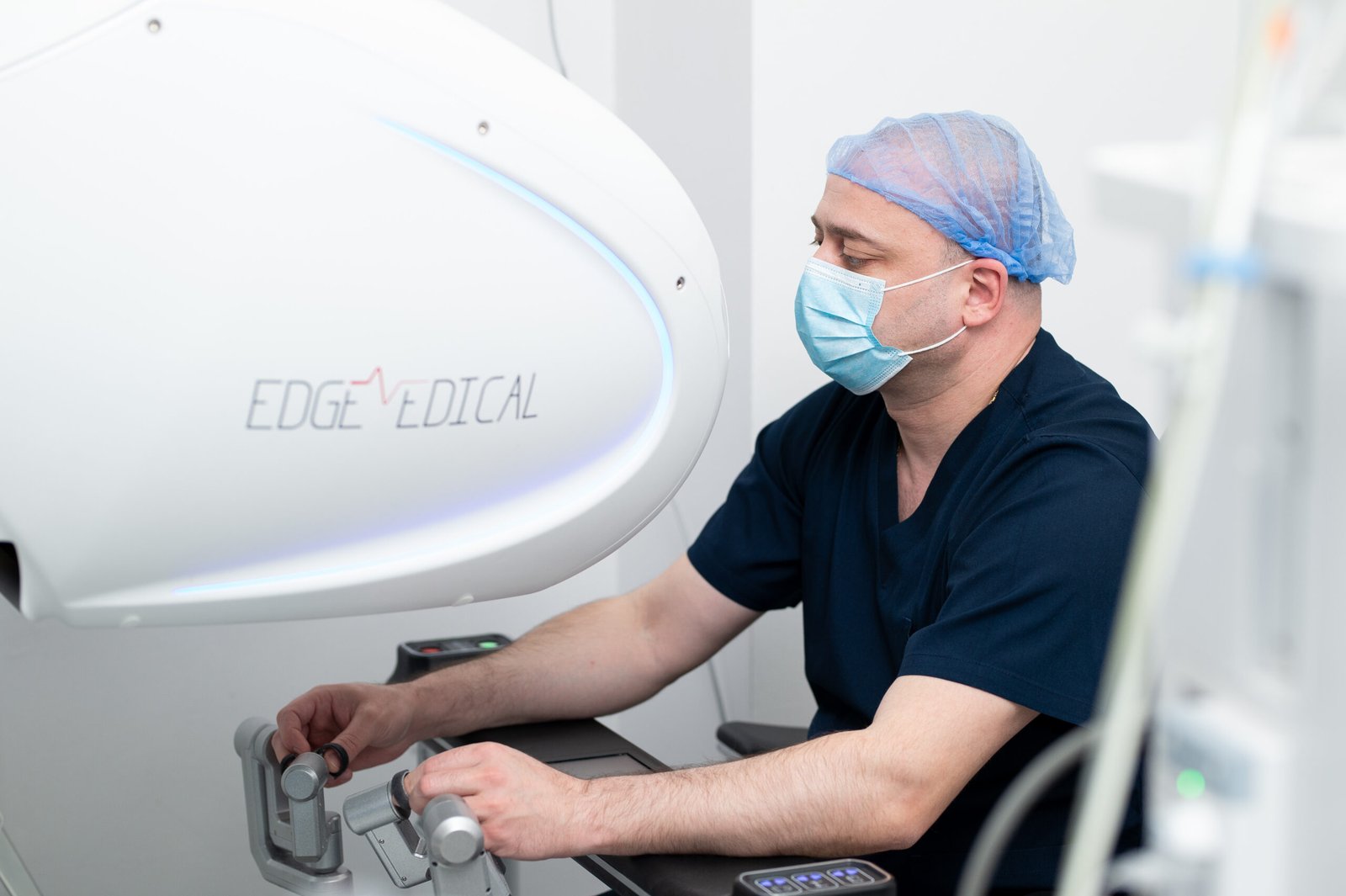
Robot-assisted surgery is a true revolution, especially for treating complex and deep-infiltrating endometriosis. This technology gives the surgeon unprecedented capabilities. First of all, it provides 3D, high-definition visualization, with the help of which we see the tissues on the screen in a three-dimensional space, magnified, which allows us to spot microscopic endometriotic lesions.
The second advantage is millimeter-precision movements and the elimination of tremor. Robotic instruments can move much more flexibly than a human hand; also, the natural tremor of the hand completely disappears. Furthermore, the technology ensures safe operation in complex zones. Deep endometriosis often damages the bowel, bladder, or wraps around nerve plexuses. With the help of the robot, we perform extremely precise dissection and excise the disease without damaging important nerves and blood vessels. This is invaluable for women who are planning motherhood in the future.
Exactly how does endometriosis affect fertility, and how does surgery help solve this problem?
Endometriosis is one of the leading causes of infertility because it creates a toxic environment in the body that attacks the reproductive system on multiple fronts. It decreases ovarian reserve, as cysts on the ovaries damage healthy tissue. The constant inflammatory process has a direct impact on the cellular level and worsens egg quality. Furthermore, adhesions change the anatomy of the pelvic cavity, which disrupts fallopian tube function and makes egg transport difficult.
Also, inflammatory agents prevent the fertilized egg from attaching to the uterine wall. In my experience, correctly and timely performed surgical intervention radically changes the picture. After the inflammatory lesions disappear and the anatomy is restored, the chances of pregnancy — either naturally or through in vitro fertilization — increase dramatically.
During such complex surgeries, what is the biggest challenge for you as a surgeon?
The most difficult and responsible task is maintaining the golden mean. On the one hand, my goal is the complete, radical removal of the disease so that the patient is freed from pain and we prevent a relapse. On the other hand, the ultimate priority is the maximum preservation of fertility. When dealing with large endometriotic cysts or massive adhesions, excising the cyst can also damage healthy ovarian tissue. This is exactly where the surgeon’s utmost caution, correct tactics, and those high-precision technologies we already discussed are required.
In conclusion, what would you advise women who are reading this interview now and might be recognizing their own symptoms?
My main message is never to consider severe pain as normal. If menstruation forces you to stay in bed, take strong painkillers, and miss out on important events — this is not a woman’s lot; it is a signal from the body that it needs help. Timely consultation with a specialized gynecologist significantly reduces the risk of the disease spreading and increases the success of treatment. Endometriosis is a chronic disease, but modern medicine has a full arsenal to manage it effectively. You can live without pain and preserve the chance for the happiness of motherhood. Do not stay alone with the pain.