

Givi and Nuki Chikobava: Care as a Legacy
Intervewed by Eka Noniashvili
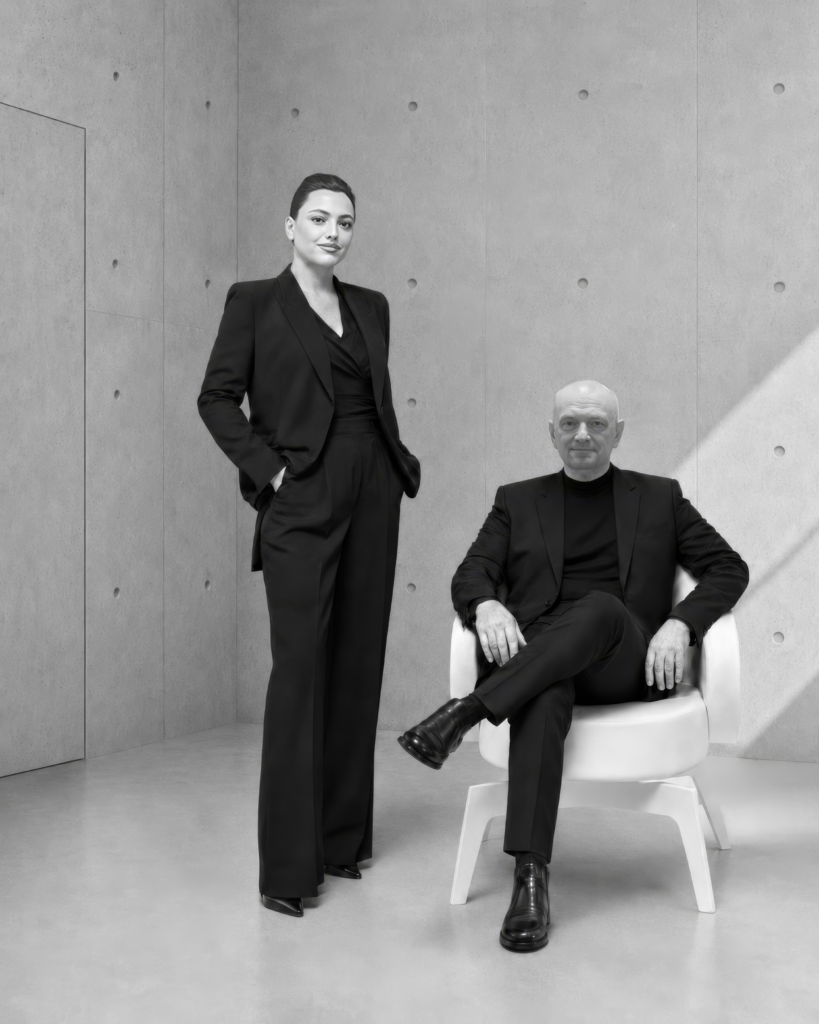
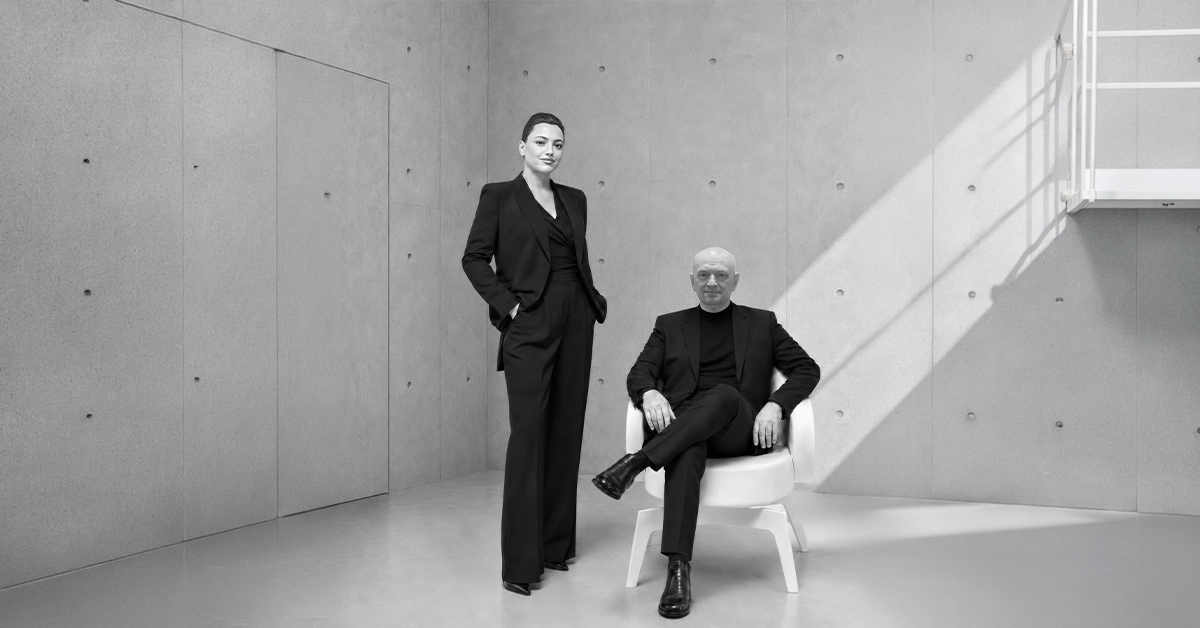
Here, medicine is neither just a profession nor merely a choice; it is a way of caring for people that takes shape over the years, is solidified by experience, and ultimately transforms into a lifelong responsibility. A father walked this path through his own school of thought, his principles, and his authority. His daughter now continues in the exact same space, driven by her own decisions, but guided by the values instilled in her since childhood. Two paths — a conscious decision and an inevitable pull — have intertwined so closely that today it is hard to tell where one ends and the other begins. This is the story of Givi and Nuki Chikobava.
Givi Chikobava: General surgeon, surgical oncologist, and Associate Professor at the Department of Surgery of the Medical University, with four decades of experience. He is a beloved lecturer among students, a social entrepreneur, and an experienced surgeon whose most impressive “operating room” memory is his first independent surgery—and the man who “accidentally” walked in that night…
Nuki Chikobava: Surgical oncologist, mammologist, Academic Doctor of Medicine, and Assistant Professor at the Department of Surgery of the Medical University. Her father is by her side both in the auditorium and the operating room, but not “accidentally”—she chose this path herself at the age of 11 when she first opened the door to her father’s operating room…
I am in a hurry; the phone could ring at any moment, and a different story could begin. Nuki — daughter, colleague, and surgeon—is a passive participant in the interview. She listens to her father with pleasure, just as she normally does during lectures, surgeries, or simply over a cup of tea in the evening. She mostly helps me reveal the portrait of her proud father, and through this, her own true profile shines through most clearly.
We started with the traditional question of our column: How did medicine enter the Chikobava family?
Givi Chikobava: No one in my family was a doctor. But from childhood, I knew what I wanted to be when I grew up — a surgeon and a professor. My decision was somewhat romanticized: I liked movie heroes who stepped into the frame wearing white coats and saved people fighting for their lives. I wanted to be a savior too, so I enrolled in the medical institute. However, for me, as for most, the doctor within was truly forged during independent night shifts.
I was a clinical resident at the Department of General Surgery at the Republican Hospital. The head of the department was an extraordinary person, Professor Sergo Khundadze. You rarely meet a person like him—a decent, educated surgeon who treated us young doctors like a father. I remember it was during the Abkhazia war. I was a novice doctor, it was midnight, and a patient was brought in with acute intestinal obstruction. It was a very difficult case. An emergency surgery. I was struggling, couldn’t get in, and I heard a voice: “Try from the left, from the lateral groove.” It was Mr. Sergo. Later, at the professor’s 80th birthday, his students discovered that this wasn’t an “accidental” attendance; he had “accidentally” walked in on the first surgery of every single one of his students. It was amazing teachers like him who shaped us into doctors.
I feel that you yourself must be exactly this kind of teacher. Let me ask about Nuki — she is probably your main student, and you passed down the legacy of medicine to her…
Givi Chikobava: No. I didn’t want Nuki to be a doctor. This beautiful white coat cannot carry you down an equally white and clean path; there are many dark days here — insults, ingratitude, defeats. A doctor suffers the most when things don’t go as desired with a patient — I stay awake at night, constantly overthinking. I pitied my daughter having to take this path. However, her mother and grandfather thought otherwise and got their way…
Nuki, tell us, how did the majority in the family “get their way” in favor of the medical profession?
Nuki Chikobava: Actually, it’s all Givi’s fault anyway…
My childhood smelled like a doctor’s coat, but I always missed the smell of my father in it; he was always on duty. He would come home late or not at all. On my 11th birthday, when asked what I wanted as a gift, I wished to stand next to my father during a surgery — nothing else. My father didn’t like it, but he couldn’t say no. Three surgeries were performed that night. I attended all three. I remember them all. I walked out of the operating room knowing I would become a surgeon too.
Even though I “got my way,” I always consider my father’s recommendations. During my residency in Israel, I thought about this deeply. Sleepless nights, ten surgeries a day — it was very hard for me. My supervisor helped me out, too. After the general surgery course, I switched to breast surgery. I was very “lucky”; I met the best teacher who stood by my side, and we operated together. I really like general surgery, but it demands a huge sacrifice from a woman — you have no personal time, you don’t belong to your family, you entirely belong to your profession. Mammology is a narrower profile. My father and I still perform surgical operations together, so in this regard, I am continuing the path that brought me into medicine.
Nuki, I will ask you directly and expect an honest answer — are you in the shadow of your father, Professor Givi Chikobava?
Nuki Chikobava: First and foremost, it is a great responsibility for me. At an early age, I didn’t realize the weight of it. In the institute, my last name helped me: Givi’s daughter, Guram’s granddaughter. Sometimes I felt angry because they demanded more from me due to my surname. Later, however, I realized that it’s more of a burden than a benefit. It reminds you of itself every day, at every surgery, at every lecture. You do not have the right to be just good, or averagely good, because the bar is set high; you have to be as good as them, or even better.
I’ll tell you a secret: during lectures, I sometimes have to send my students to my father, and I am always afraid that once they listen to him, they won’t want to come back to me. My father is an extraordinary lecturer.
Givi Chikobava: I’ll be honest with you, I am not completely satisfied with her work. I have been at the department since 1984; I know what hard work is. Immense work—practice, theory, reading books. Right now, working with students gives me the most pleasure, because I am completely confident; I have an answer to every question. If I don’t, I say: “I don’t know, I need time.” I’m not ashamed of that; years of experience give you that freedom. But if you decide to be a doctor, you have to burn for it completely; you have to put in an enormous amount of work. This is what I teach my students, and Nuki too; I try to share this with her…
Nuki, your father has been your lecturer as well. Do you remember your first lecture with him? What was the emotion like?
Nuki Chikobava: Fourth year, a lecture in general surgery. Givi walked in. I really wanted my classmates to meet a “different Givi.” Within 15 minutes, he was called away to a surgery, apologized, said goodbye, and ran off. I was disappointed.
But during the following lectures, my classmates fell so deeply in love with him that, to this day, they are closer friends with my father and communicate with him more — wishing him happy holidays — than they do with me. Once, I got into an argument with a student, and they blurted out: “You are nothing like your father—what a person he is!” I felt both offended and genuinely pleased.
Givi himself has gone through an extraordinary school of medicine, and that is exactly what he is trying to do — to instill the same love and professionalism in his students. It’s true that medicine today is shaped by different contours than in his time; that same level of absolute self-sacrifice isn’t quite there, but together, my father and I manage to balance the deep experience of a great school with modern opportunities for future doctors.
Let me ask you about Georgian medicine. Where do you see the biggest challenge in this field today?
Givi Chikobava: Instrumental medicine, diagnostics, new operating methods — all of this is good; it’s a step forward. The fact that we send patients abroad with state funding is also good; they should have this opportunity and support. But Georgian medicine cannot develop solely through this path. The same kind of support is needed for local doctors and the field itself. We have immense resources. There are many world-class doctors in Georgia; there are very few surgeons worldwide who operate the way Georgian surgeons do.
For example, the separation reconstruction method for abdominal hernias. It was introduced in Europe in 2014. It’s a very complex surgery, one of the most complication-proof interventions in general surgery. It hasn’t taken root here. I was interested and tried it; I did about 60 surgeries in 5 years with good results. I applied to the ministry to assign it a medical code — this is not a standard umbilical hernia protocol, it’s a much more complex operation, and without proper remuneration, we won’t be able to implement it. Yet, we have the resources here, while the Georgian patient goes abroad…
One could talk endlessly about medicine with the Chikobavas — with measure, care, and a deep love for people and patients. However, this is not everything. The “dawn” of their lives — the second, and I believe, the most extensive part — is a project that also stems from their family, starting with their eldest son. And all of this is united by a high sense of social responsibility: an unquenchable desire to care for people.
Tell us about your social project. How was the “Aisi” Day Center born?
Givi Chikobava: My eldest son has an intellectual disability. He is a 42-year-old child, kind and lovely. As my priest says, he is both my cross and my gift.
When he was little, I kept thinking there had to be some medicine, some solution. That’s how we traveled the whole world. We were sent to the European Epilepsy Center in Sweden, where I personally met Peter Wolf (whose syndromes are included in medical textbooks). I told him everything — where we had been, what we had done — and asked somewhat hopelessly: “Is there really no medicine for this?!” We spent a few days there. Finally, Peter took me to a local day center. For the first time, I saw such a space, marvelously arranged for 250 children. Peter told me, “This is their medicine.” As soon as I returned, I decided to create the exact same thing in Georgia.
Initially, in 2004, I bought a space on Larsi Street. The Turkish state, my relatives, and friends helped me a lot. Now we have a center in Avchala with a yard, a wine cellar, greenhouses, and a garden. As a family, we raise up to 5,000 GEL in donations every month. The children have activities every day except weekends; they stage plays and have two meals a day. My Guriko also “works” at this center.
Now there is a new challenge: these children are growing up, and as they age, unfortunately, many are left without parents or caregivers. Therefore, my main project now is a “Care Home,” where, in the future, people with disabilities who are left without a provider will be able to continue living with dignity in a nurturing environment.
Even if I have to sell everything I own, I must finish this project in this lifetime.
How would you summarize the path the Chikobavas are walking today? In a word, what would you call your life?
Givi Chikobava: In the 90s, I grew closer to the church. I had read the Gospel before that, but in the temple, everything changed; every question was answered. I consider it a great gift from God that I stepped onto the path of the soul’s salvation. And the shortest path to that is caring for others. I couldn’t find a better place on this path than medicine.
The only thing I regret is that it feels like I’ve wasted a lot of time. I could have done more. Every morning, during prayer, I repeat two words to the Lord: Thank you—for everything He allowed me to do. Sorry for everything I couldn’t do because of my own inadequacy.
Thank you, and sorry. These two words are my life and my medicine.
Nuki Chikobava: The main hero of my life is my father — utterly devoted to his children and the most caring person around. Everything good, every kindness, is associated with my father for me. I owe everything I have to him, and my gratitude belongs to him as well. Thank you for every single day…
Givi Chikobava looks up — addressing God. Nuki, following her father’s path, dedicates her gratitude to him for every single day. Perhaps this is exactly the essence of this story: the path to God must be walked through love for people — a love that passes from father to child and will continue through generations as a living example of kindness, love, humanity, and true professionalism.