



Dr. MARCOS HORTON
President of the International Federation of Fertility Societies (IFFS)
The Future of Creating Life, Reproductive Medicine, and Modern Challenges
Interviewed by Ketia Belkania
There was a time when life began as a mysterious, inexplicable miracle. Today, quite often, it is born in a laboratory, under a microscope, and as a result of critical medical decisions. Reproduction — a process that was once intimate, instinctive, and inevitable — has become one of the most technologically manageable, ethically complex, and politically charged fields of our time. At the epicenter of this global transformation stand not only doctors but the architects of new possibilities.
Marcos Horton, President of the International Federation of Fertility Societies (IFFS), stands exactly at the crossroads where science, societal norms, and the very future of humanity intersect.
This is not just a conversation about having children. It is a deep and comprehensive dialogue about who has the opportunity to create life, under what conditions it happens, how the modern lifestyle is altering our biology, and where the ethical line is drawn between healing and “designing” life.
We put everything off for the future today — relationships, children. Does it turn out that the modern lifestyle is quietly but deliberately working against our own biology?
I completely agree. Aside from career and professional development, we delay everything today. Since the 1960s and 70s, women’s participation in the workforce has increased dramatically, which in itself is a highly positive development. However, on the flip side, postponing childbearing has become one of the leading causes of infertility today. We are witnessing a clear shift in the reproductive window. Biologically, the ideal time to have a child is between the ages of 20 and 30. Today, for women, this average has shifted to between 35 and 40. It is exactly this age-related decline in fertility that is the key contributing factor to infertility.
While a decline in fertility is also observed in men, the age effect is much more radical for women. A man can continue to produce sperm well into old age, so the decline in their reproductive function is a much more gradual process.
This age shift has created a phenomenon we now call the “fertility gap.” This refers to the difference between the desired number of children a couple wants and the actual number they ultimately manage to have. If you start trying to have a child at 36 or 38, naturally, you will have fewer children. After having a first child at 38, by the time you return to the clinic at 40, the chances of getting pregnant are much lower, and by 42–43, they are almost minimal. The main challenge is that we are starting this crucial stage of life too late.
What is the one modern lifestyle habit or factor that is currently damaging our fertility the most, yet goes unnoticed?
That is a very interesting question because there is still a lot we do not know for certain. However, we are well-informed about classic harmful factors like frequent tobacco and alcohol consumption. There is also data on the negative impact of cannabis, especially concerning male fertility.
The biggest concern, however, revolves around environmental pollutants, chemicals, and pesticides. Today, plastic — specifically micro and nanoplastics — is a massive source of anxiety. Its particles can be found in practically every tissue of the human body, including the brain. Most alarmingly for our field, plastic has been found in follicular fluid. When we retrieve eggs for reproductive treatment, some studies confirm the presence of nanoplastics right in the environment where the egg develops. Animal studies show us a certain picture, but fully demonstrating the long-term effects of environmental pollutants on humans is still difficult. Nevertheless, we can say with certainty that all of this directly affects our fertility.

Do you believe that biology still dictates our love stories more than we think?
Yes, I deeply believe that biology remains the main driving force of love and attachment; that is a fundamental given. However, the modern lifestyle has introduced certain “pollutants” into our biology. I mean factors like social networks, career goals, the sheer abundance of personal choices, and anxiety disorders. Today, these are much more pronounced than they were, say, 40 or 50 years ago. Therefore, while processes are still governed by biology, they now occur under the immense pressure of external factors.
Fertility treatments are often quite expensive. Under these conditions, to what extent can parenthood be considered a high-class privilege?
This is a subject of constant discussion. In general, medical interventions are never cheap. We rarely ask how much oncology treatments or complex cardiac surgeries cost, but we constantly talk about the high price of fertility treatments. In reality, it is not any more expensive than other medical procedures. The main difficulty is that in many countries around the world, there is no insurance coverage for this.
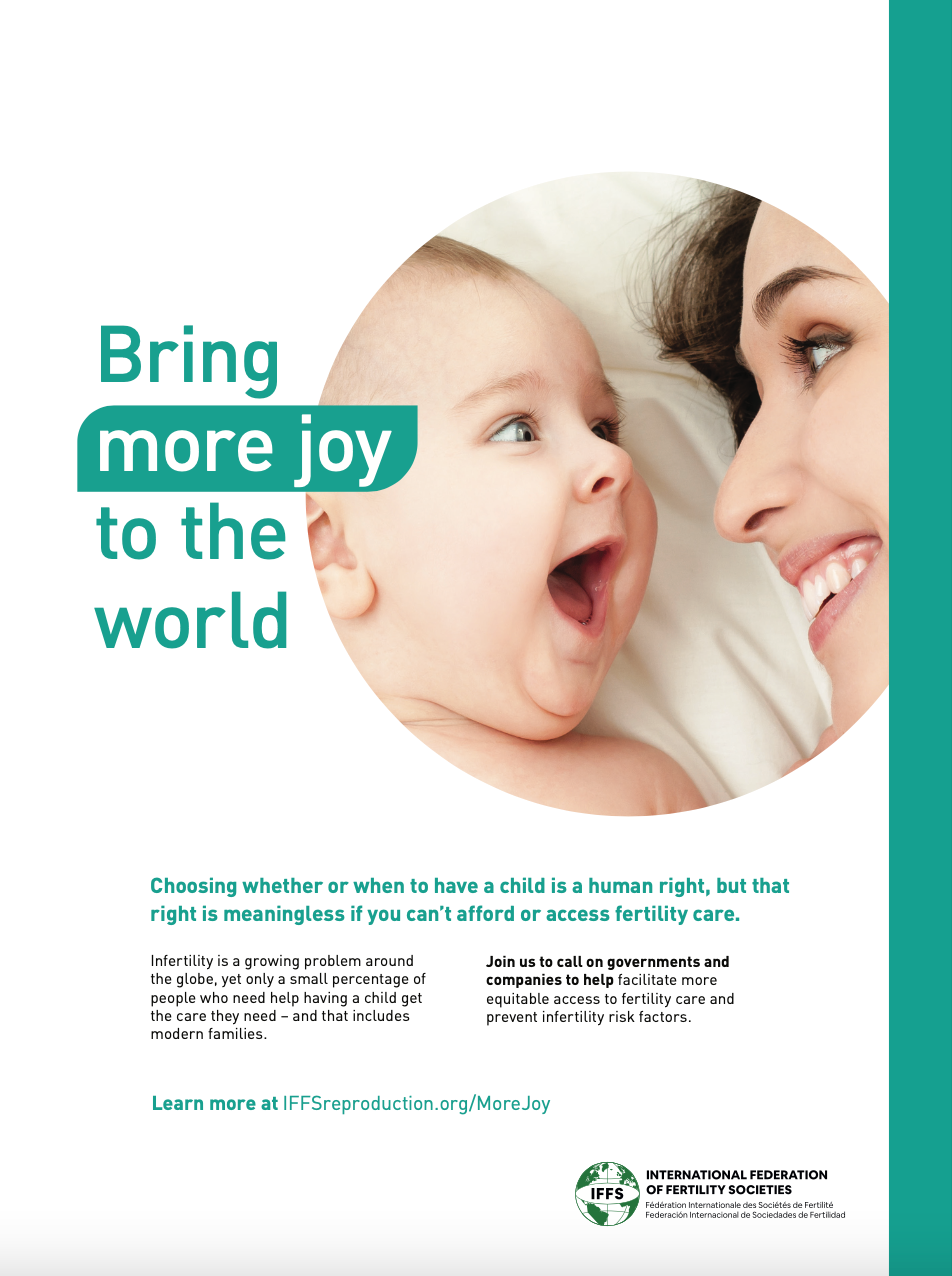
Our daily efforts are aimed at proving a simple truth to the public and decision-makers: infertility is a disease. It is caused by numerous different conditions, compounded by the age factor. Therefore, fertility treatment must become a medical priority today. It is a growing global problem and absolutely must be funded by social security systems or insurance companies. Public anxiety over the high cost is primarily driven by the fact that patients have to cover these expenses out of their own pockets.
Are we currently creating an unrealistic picture of fertility, perfect bodies, ideal pregnancies, and “perfect babies”?
I think such a narrative is more the fault of the media than the medical community. Doctors do not talk about “perfect babies.” Even after the birth of the first IVF baby, this was not the main subject of ethical discussion. Of course, certain medical interventions come with ethical questions, but our goal is not to create perfect bodies or ideal pregnancies. We simply want healthy babies to be born. Medicine can help prevent risk factors or genetic diseases, but creating a “perfect baby” is certainly not the goal of science. Furthermore, the term “perfect” is so subjective that it is impossible to even define it accurately.
In your opinion, does technology empower people, or does it increase their anxiety regarding reproduction?
Technology provides unlimited access to information, which, alongside its great advantages, brings risks and acts as a double-edged sword. For patients to avoid unnecessary anxiety, they need a proper guide to process this vast amount of information. This is exactly where the doctor’s role comes in. Today, we cannot pretend that patients are uninformed — they can look up any detail and use artificial intelligence, like ChatGPT. The fact that patients do this is actually a good thing. However, they often lack the skills and tools to correctly analyze the data they receive. That is why proper communication and the dissemination of verified information by medical staff, including on social media, are essential.

What is one word you associate with the future of fertility?
Innovation. The field of fertility has constantly been based on innovation and research. Over the last 50 years, the revolution in reproductive medicine has rested on this very pillar: first came in vitro fertilization (IVF), then intracytoplasmic sperm injection (ICSI), and now genetics has taken a leading role in reproduction.
Is there a risk that in our pursuit of “improving” life, we lose its spontaneity?
Undoubtedly, the process of infertility treatment completely eliminates spontaneity. However, we are not in the position of “perfecting” life. The absolute maximum of our capabilities is reducing the risk of disease. Alongside achieving pregnancy, the main task of reproductive medicine is exactly that: avoiding hereditary and other pathologies. Going through infertility treatment is always a serious challenge for a couple, and this is largely due to the unnatural nature of the process and the lack of spontaneity.
You lead the IFFS, a truly global organization. What is the most painful inequality in reproductive care today that the world still turns a blind eye to?
First and foremost, it is the lack of access to diagnosis and treatment. In Europe, for example, we have high rates of treatment funding, though due to local regulations, we often encounter the phenomenon of cross-border reproductive tourism (for example, if surrogacy or donation is banned in one country, the patient travels to another). But the most alarming inequality is that in many regions of the world — in Africa or Latin America, and sometimes even in certain parts of the United States — people do not even have access to basic infertility diagnostics. Our main goal is to achieve global equality in this access.
Is the future of fertility in danger of remaining a privilege of geography and wealth rather than a universal right?
Today, it truly remains a geographical privilege, but our mission is to change this reality. As a non-governmental organization and a partner of the World Health Organization (WHO), we are constantly lobbying on this issue and trying to raise awareness for regions where access is severely limited.
We are entering an era where it is possible to analyze, select, and even optimize embryos. Personally, where do you draw the ethical line between healing and “designing” life?
This is quite a dynamic process. In the past, we drew that red line at cloning — even though it is actively done in animals and veterinary medicine in general, cloning humans has no scientific or ethical justification. Today, the main topic of discussion is polygenic risk scoring. Preimplantation genetic testing (PGT) checks the embryo’s chromosomes, but it is now possible to screen genes for diseases that manifest in adulthood (for example, cancer or diabetes). This topic is highly controversial: do we have the right to make a decision about an embryo that hasn’t even been born yet based on the hypothetical risk of a future disease? This is one of the most difficult ethical dilemmas in modern science.
Are we moving toward a world where reproduction becomes less “natural” and more “curated”? Should we be worried?
Of course, the process is becoming less natural and more managed. However, since 1978, the scientific world has always shown the utmost caution and prudence. The focus has consistently been placed on treating diseases and preventing genetic anomalies, not simply on the artificial manipulation of the process.
How will Artificial Intelligence (AI) change the decision-making process in IVF? Are we ready to entrust the first seconds of human life to machines?
Artificial intelligence is undoubtedly an outstanding innovation. We can already clearly see the advantages of machine learning in incubators, where the earliest stage of human life develops. Software helps embryologists select embryos; it can detect and analyze developmental nuances at a much faster pace than a human, capturing details that are simply impossible to see with the naked eye. Even though the technology is still being refined, I am confident that AI will bring far more benefits than problems.
For decades, fertility was viewed exclusively as a “woman’s problem.” What is the most common myth about male fertility today?
The biggest myth is the denial of male infertility. Unfortunately, in many regions of the world, there is still a stigma against women who cannot get pregnant, while men refuse to be examined. In reality, in 50% of infertile couples, we are dealing with a male factor or mixed infertility. It is absolutely not just a woman’s issue.
Are we properly assessing the global decline in male reproductive health? And if so, what is driving it?
This topic provokes heated debate. If we rely solely on spermogram data, there seems to be a clear trend of global decline. However, we have to consider that 50 years ago, analyses were done using completely different technologies and standards, making exact parallels difficult to draw. Nevertheless, there is a consensus that agrochemicals and other environmental pollutants indeed have a serious negative impact. The majority of scientists agree that male reproductive health has visibly worsened compared to the last century.
What is the most persistent cultural myth about fertility that absolutely must be shattered today?
First of all, we must shatter the myth that a woman can easily get pregnant at any age. The media often reports stories of women getting pregnant at 50 without providing details, creating an illusion in society that it is natural and easy. In reality, pregnancy at 50 is not a physiological norm and almost always requires lengthy medical intervention, often involving egg donation. The reality is that humans are not fertile at every stage of life.
Do you hold an opinion on fertility medicine that might be unpopular within your field or in society?
In society, we often encounter a negative attitude, as if doctors in this field are motivated solely by commercial goals and that treatment is intended exclusively for a privileged class. Such an opinion is baseless. In reality, the high costs are due to the fact that healthcare systems in many regions of the world do not cover these expenses, shifting the entire financial burden onto patients, not because doctors are driven by commercial interests.
If you could change one global health policy overnight, what would it be and why hasn’t it happened yet?
Without hesitation, I would implement universal coverage for fertility diagnosis and treatment. Due to the age shift of the reproductive window, the number of people who are infertile will grow even more in the future. Providing this from the state level does not require the colossal expenditures that many other medical procedures do. Moreover, this kind of investment yields a massive return: a new human being is born, who will create wealth in the future. Unfortunately, politicians still do not fully realize this.
When history looks back at this decade, what will it say we did right, and what did we miss?
We are doing the right thing by globally increasing access to reproductive care, though there is still a lot of work ahead. On the other hand, we are dangerously ignoring the dramatic decline in population growth rates. Younger generations are increasingly voluntarily choosing not to have children. This is a cultural shift that will peak in about 30 years and cause a severe demographic crisis, including a sharp labor shortage — the signs of which are already obvious in Europe.
Finally, not as a doctor, but as a human being, what core message would you leave for the next generation of parents?
The fundamental drive to have children and pass down our genes to the next generation is deeply imprinted in our DNA. My main message would be this: give yourself permission to enjoy the immense joy of having a child. The world is indeed changing, and modernity is complex, but from a purely human perspective, there is nothing better in this world than creating new life and having your own child.